Dietary Supplement Capsule Manufacturing is a controlled process that turns measured ingredients into stable, swallowable products. It includes formulation, raw-material testing, blending, encapsulation, polishing, inspection, packaging, and recordkeeping. The work happens under defined conditions, not on guesswork. A capsule may look simple, but its fill weight, moisture level, disintegration, and microbial quality require close control.
Grand View Research valued the global dietary supplements market at approximately $177.5 billion in 2023. Its report also projects strong growth through 2030. Meanwhile, the Council for Responsible Nutrition’s 2024 consumer survey reported that 75% of U.S. adults use dietary supplements. These figures show demand, but they do not prove product quality. That distinction matters. FDA Current Good Manufacturing Practice requirements, along with USP standards, guide manufacturers toward identity, purity, strength, composition, and contamination control.
Dr. Pieter Cohen, an associate professor at Harvard Medical School, has warned, “Supplements are not drugs, and they are not subject to the same premarket approval requirements.” His point places responsibility on manufacturers, laboratories, and responsible brands. In practice, this means checking a powder before it enters the hopper, monitoring capsule weight during production, and retaining samples for future investigation. The process is not glamorous. It is not foolproof. Human review still matters.
A reliable introduction to capsule manufacturing should therefore examine equipment, excipient selection, testing methods, documentation, and supplier qualification. It should also acknowledge uncertainty, because attractive packaging cannot replace verified evidence.
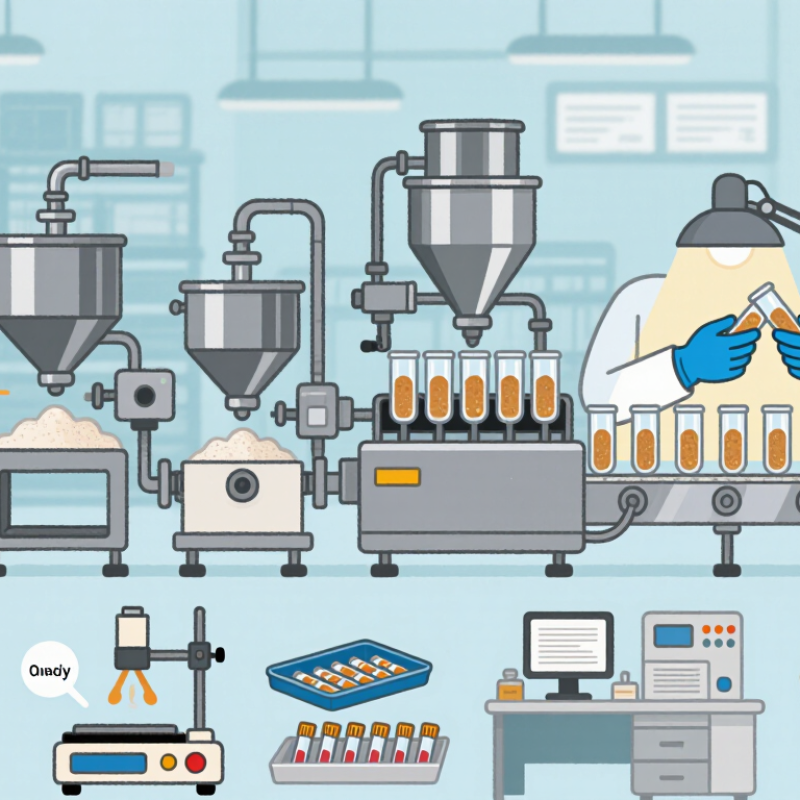
Dietary supplement capsule manufacturing begins with choosing a shell that matches the formula, dose, and intended use. Hard-shell capsules usually contain two fitted pieces: a body and a cap. They are commonly made from gelatin or plant-based cellulose. The powder blend is measured, mixed, tested, and filled into the larger shell section. This format suits dry powders, granules, and some small tablets. It also allows easy opening during laboratory checks. Operators monitor blend uniformity, capsule weight, moisture, and closure. Small variations matter. A capsule can look perfect yet contain an uneven dose. Reliable production depends on documented procedures, calibrated equipment, trained staff, and controlled rooms.
Softgels use a single, flexible shell formed around a liquid, suspension, or paste. The shell often contains gelatin, water, and a plasticizer, while the fill may include oils or dissolved nutrients. Rotary-die equipment shapes the shell, injects the fill, seals the edges, and cuts each unit. The process requires careful control of temperature, viscosity, fill weight, leakage, and drying time. Softgels may improve swallowing comfort and protect sensitive oily ingredients from air. However, they are not automatically better. Some formulas are unstable in liquid form, while some consumers prefer dry capsules. In practice, material compatibility deserves more attention than appearance. Even experienced teams must review storage conditions, test results, and real consumer use. Manufacturing is precise, but never entirely forgiving.
What Is Dietary Supplement Capsule Manufacturing?
Selecting Ingredients, Capsule Sizes, and Formulation Ratios
Dietary supplement capsule manufacturing begins with a practical question: can each ingredient perform reliably inside a capsule? Formulators review identity, purity, particle size, moisture, flowability, and possible ingredient interactions. A powder may look suitable but bridge inside production equipment. Another may absorb moisture and soften the capsule fill. Supplier documentation, laboratory testing, and stability data help confirm quality before scaling up.
Capsule size must match the serving weight and powder density. Common sizes range from 000 to 5, but size alone does not determine capacity. Dense minerals may fit easily, while fluffy botanical powders need more space. Formulation ratios also matter. Active ingredients should receive the intended dose, while excipients support flow, uniform mixing, and accurate filling. Too much filler can reduce efficiency. Too little may cause inconsistent weight. That balance is often harder than it appears.
Tips: Test small pilot batches before full production. Measure bulk density, moisture, and flow behavior. Check blend uniformity at several sampling points. Keep a written record of adjustments. A formulation that works in one machine may fail in another. This is an easy detail to underestimate. Qualified professionals should also review labeling, permitted ingredients, and applicable manufacturing requirements for the target market. Formulas sometimes need revision after stability testing, and that is not necessarily a failure. It may reveal a better, safer manufacturing decision.
Selecting ingredients, capsule sizes, and formulation ratios requires matching the powder blend’s bulk density and dosage to the available capsule volume. The chart shows approximate internal volumes for standard hard-capsule sizes.
Approximate capsule volumes: size 000 is the largest commonly used hard capsule, while size 5 is the smallest. Actual fill weight varies according to ingredient density, granulation, moisture, and the formulation ratio of active ingredients to excipients.
Dietary supplement capsule manufacturing converts measured ingredients into uniform, sealed doses. The process begins with identity checks, weighing, and controlled material release. According to the Council for Responsible Nutrition’s 2024 Consumer Survey, 75% of U.S. adults use dietary supplements. That level of use makes consistency more than a production target; it becomes a trust requirement.
Blending requires careful control of particle size, density, and mixing time. Operators may use sieve analysis and sampling plans to detect segregation before encapsulation. A powder can look uniform and still vary internally. That is the difficult part. During encapsulation, machines control fill weight, capsule separation, closing pressure, and visible defects. In-process checks commonly include average weight, weight variation, moisture, disintegration, and capsule integrity. U.S. FDA Current Good Manufacturing Practice requirements in 21 CFR Part 111 require specifications, laboratory controls, and documented production procedures.
Testing does not replace process discipline. It verifies whether the process remains stable. Statistical process trends can reveal gradual fill-weight drift before a batch fails. USP standards, including general requirements for dosage-unit uniformity, provide useful testing principles, but each formula may behave differently. Small differences in flow can matter. Experienced teams therefore review deviations, retain samples, equipment-cleaning records, and environmental conditions. No batch is perfectly predictable. A thoughtful manufacturer keeps questioning the process, especially when routine results appear unusually smooth.
What Is Dietary Supplement Capsule Manufacturing?
Applying FDA 21 CFR Part 111 cGMP Controls to Capsule Production
Capsule manufacturing is a controlled process, not simple powder filling. In 2023, the Council for Responsible Nutrition reported that 74% of U.S. adults used dietary supplements. That demand increases the need for reliable production records and testing. Under FDA 21 CFR Part 111, manufacturers must establish written procedures, qualified personnel, and documented quality controls. Each ingredient needs identity verification before use. A supplier certificate alone may not be enough.
Production begins with an approved master manufacturing record. Operators weigh materials, blend powders, and monitor fill weight, moisture, and capsule integrity. In-process checks can detect segregation or poor flow before release. Finished batches require laboratory review against established specifications. Records should show who performed each step, when it occurred, and what changed. A clean-looking capsule proves little. One missed deviation can weaken an otherwise strong batch history. That is a practical concern worth revisiting.
Tips: Keep sampling tools clean and traceable. Compare actual yields with expected yields. Investigate unusual weight variation promptly. Store reserve samples under defined conditions. Review complaints for recurring patterns, even when no serious event appears. FDA inspection findings repeatedly show that incomplete documentation can undermine otherwise reasonable controls. A thoughtful manufacturer treats every record as evidence, not paperwork.
| Manufacturing Dimension | Relevant 21 CFR Part 111 Control | Application to Capsule Production | Required or Expected Evidence | Control Classification |
|---|---|---|---|---|
| Personnel qualification and hygiene | §111.10 requires personnel who manufacture, package, label, or hold dietary supplements to have appropriate education, training, or experience and to follow hygienic practices. | Train operators on material handling, allergen controls, line clearance, capsule-machine operation, contamination prevention, and responses to deviations. | Training records, job descriptions, authorization lists, hygiene procedures, and documented retraining. | Regulatory requirement |
| Facility and environmental controls | §111.15 requires the physical plant and grounds to be maintained in a clean and sanitary condition and operated to prevent contamination. | Separate or suitably control dispensing, powder blending, encapsulation, inspection, and packaging activities. Manage dust, traffic, pests, and mix-up risks. | Sanitation procedures, cleaning logs, pest-control records, environmental monitoring where justified, and maintenance records. | Regulatory requirement |
| Equipment and utensils | §111.27 requires equipment and utensils to be designed, constructed, and used so they are suitable for manufacture and do not contaminate or adulterate products. | Control the capsule filler, powder hopper, dosing components, transfer tools, metal detector, checkweigher, and associated contact surfaces. | Equipment identification, cleaning and use logs, preventive-maintenance records, calibration records, and inspection results. | Regulatory requirement |
| Component and capsule-shell specifications | §111.70 requires specifications for components, packaging, labels, in-process materials, and finished dietary supplements, as applicable. | Define specifications for active ingredients, excipients, colors, lubricants, and empty hard capsules, including identity, purity, strength, composition, and applicable physical attributes. | Approved specifications, supplier documentation, sampling plans, certificates of analysis, and component-release decisions. | Regulatory requirement |
| Receipt, quarantine, and material status | Part 111 requires controls over components, packaging, labels, and in-process materials so materials are properly identified and used only when approved. | Assign lot or control numbers, maintain quarantine status until quality review is complete, and prevent substitution of capsule shells or powder components. | Receiving records, status labels, inventory transactions, sampling records, test results, and material-release authorization. | Regulatory requirement |
| Master manufacturing record | §111.95 requires a master manufacturing record for each unique formulation and batch size. | Document the formula, theoretical yield, capsule size, component quantities, order of addition, blending instructions, encapsulation settings, packaging instructions, and established specifications. | Approved and version-controlled master record with quality-unit approval and change history. | Regulatory requirement |
| Batch production record | §111.105 requires a batch production record for each batch manufactured. | Record actual component lots and quantities, equipment used, processing dates and times, in-process checks, deviations, yields, reconciliation, and packaging activities. | Completed, reviewed, and approved batch record linked to all material and test records. | Regulatory requirement |
| Blending and powder-flow control | Part 111 requires written production and process-control procedures designed to ensure the supplement meets established specifications. | Control blend time, order of addition, screen or mill use, lubricant addition, segregation risk, and powder flow to support consistent capsule fill. | Approved process instructions, blend records, yield calculations, sampling results, and documented deviation investigations. | Process-specific control |
| Encapsulation and in-process checks | Part 111 requires in-process specifications and controls when needed to ensure finished products meet specifications. | Monitor capsule appearance, closure, fill-weight consistency, machine settings, empty or damaged capsules, powder leakage, and line-clearance status according to the approved procedure. | In-process test results, equipment settings, operator checks, rejected-unit counts, reconciliation, and documented corrective actions. | Specification-dependent |
| Laboratory testing and examination | §111.75 and §111.115 address testing, examination, and laboratory operations used to verify that specifications are met. | Use scientifically valid methods, as applicable, for identity, strength, composition, purity, microbial limits, contaminants, and physical attributes such as capsule integrity or disintegration. | Approved methods, method records, analyst training, laboratory worksheets, results, investigations, and quality-unit review. | Regulatory requirement |
| Packaging, labeling, and label reconciliation | Part 111 requires packaging and labeling operations to be controlled to prevent mix-ups and contamination and to ensure correct labeling. | Verify product identity, serving information, ingredient declaration, lot or batch identification, net quantity, tamper-evident features where applicable, and packaging-line clearance. | Approved label copy, line-clearance checklist, packaging records, label issuance and reconciliation records, and finished-package inspection results. | Regulatory requirement |
| Quality-control review and release | Part 111 assigns quality-control responsibility for approving or rejecting components, packaging, labels, in-process materials, and finished batches. | Release a capsule batch only after required records, test results, deviations, yields, reconciliation, and specifications have been reviewed and found acceptable. | Quality-unit approval, release status, deviation and CAPA records, out-of-specification investigations, and disposition decisions. | Regulatory requirement |
| Records and traceability | Part 111 requires records that demonstrate compliance and support traceability of manufacturing, packaging, labeling, testing, and quality decisions. | Maintain a complete link between finished capsule units, component lots, equipment, operators, processing activities, laboratory results, packaging materials, and distribution records. | Controlled paper or electronic records, audit trails where applicable, retention controls, complaint records, and retrieval procedures. | Regulatory requirement |
Dietary supplement capsule manufacturing converts measured ingredients into controlled, traceable doses. Quality begins before filling. Each raw material needs identity testing, supplier documentation, and defined acceptance criteria. The 2023 Consumer Survey from the Council for Responsible Nutrition reported that 74% of U.S. adults used supplements during the previous year. That level of use raises expectations for reliable testing.
Assays confirm whether a capsule contains the labeled amount of each active ingredient. Laboratories may use HPLC, titration, or spectroscopy, depending on the compound. Results should include validated methods, reference standards, and clear calculations. A passing assay does not prove perfection. Sampling errors, uneven powder blending, or ingredient degradation can still hide behind one result.
Microbial limits testing examines total aerobic microorganisms, yeast, mold, and specified pathogens. USP General Chapters <61> and <62> provide widely recognized testing approaches. Environmental monitoring also matters, especially near open capsule-filling equipment.
Stability studies then track potency, appearance, moisture, and dissolution under defined conditions. Long-term and accelerated data help establish a defensible shelf life.
FDA’s dietary supplement CGMP requirements under 21 CFR Part 111 also expect scientifically supported specifications and written records. Numbers can mislead. A strong system connects every result to the batch, analyst, method, and storage condition.
Staff verify identities, weigh materials, and release them under controlled procedures. Supplier records and acceptance criteria support each decision. A label alone is not enough.
Particle size, density, and mixing time affect uniformity. Sieve checks and planned samples can reveal segregation. A smooth-looking powder may still vary internally.
Equipment monitors fill weight, capsule separation, closing pressure, and visible defects. Operators check average weight and weight variation during production. Small flow changes matter.
An assay estimates the amount of each active ingredient in a capsule. Laboratories may use chromatography, titration, or spectroscopy. One passing result does not prove perfection.
Testing measures aerobic microorganisms, yeast, mold, and specified pathogens. Environmental checks matter near open filling equipment. Clean surroundings help, but they need evidence.
Studies track potency, appearance, moisture, and dissolution over defined periods. Long-term and accelerated conditions support a reasonable shelf-life decision. Predictions can still be imperfect.
Repeated checks can detect gradual fill-weight drift before a batch fails. Trend reviews may expose slow changes that one sample misses. Routine results deserve questions too.
Records should identify the batch, analyst, method, storage condition, equipment cleaning, and any deviation. Retained samples support later investigation. Documentation is not decoration.
Dietary Supplement Capsule Manufacturing is a controlled process for producing reliable hard-shell and softgel capsules that deliver vitamins, minerals, botanical extracts, and other permitted ingredients. It begins with selecting suitable ingredients, capsule sizes, and formulation ratios based on product specifications, flow characteristics, dosage requirements, and compatibility. Ingredients are then weighed, blended for uniformity, and transferred into capsules using appropriate encapsulation equipment.
Throughout production, in-process testing helps confirm capsule weight, appearance, fill consistency, and physical performance. Manufacturing facilities should apply FDA 21 CFR Part 111 cGMP controls, including documented procedures, equipment sanitation, personnel training, material traceability, and batch record management. Finished products are evaluated through identity and potency assays, microbial limit testing, and stability studies to verify quality, safety, and shelf-life expectations. Together, these steps create a structured system that supports consistent capsule production and helps ensure that dietary supplements meet established specifications before release.