Direct factory inventory manufactured under strict NSF/ANSI 455-2 GMP and ISO 9001 compliance standards.
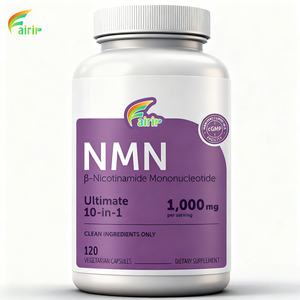
Over the past decade, China has solidified its position as the world's primary manufacturing hub for active pharmaceutical ingredients (APIs), custom peptide synthesis, and high-purity bioactive intermediates. Driven by significant capital investments in automated Solid-Phase Peptide Synthesis (SPPS) platforms, advanced liquid chromatography purification cascades, and strict international quality compliance systems, top-tier Chinese peptide factories now supply over 60% of the world's commercial therapeutic, cosmetic, and nutraceutical peptide raw materials.
For international buyers—ranging from pharmaceutical formulation houses and clinical research organizations (CROs) to private-label supplement brands—navigating the global peptide market requires more than just searching for low unit costs. Modern search intent and procurement analytics reveal that procurement directors prioritize Information Gain: rigorous analytical verification, batch-to-batch consistency, transparent regulatory documentation (COA, HPLC, MS, CMF), and bulletproof intellectual property protection.
"In peptide synthesis and bulk active ingredient procurement, a fractional impurity difference of 0.5% is not merely a specification metric—it dictates bio-activity, shelf-life stability, cell-receptor binding efficiency, and ultimate product safety."
This white paper serves as an authoritative guide for corporate purchasing agents, brand owners, and research entities seeking to establish strategic manufacturing partnerships with China’s premier bulk peptide suppliers. By examining synthesis methodologies, quality assurance architectures, future procurement trends, and regulatory hurdles, buyers can de-risk their supply chain while capitalizing on direct-from-factory cost efficiencies.
Engineered for precision, total compliance, and rapid scale-up from laboratory R&D to commercial multi-ton batch delivery.
Combining Solid-Phase Peptide Synthesis (SPPS) for complex long-chain sequences with Liquid-Phase Synthesis (LPPS) for high-volume cost reduction in shorter peptides.
Industrial preparative Reverse-Phase High-Performance Liquid Chromatography (RP-HPLC) ensures exact amino acid sequence fidelity with guaranteed purity levels exceeding 99.0%.
Operated within ISO Class 5 and Class 7 cleanroom suites in compliance with US FDA, EU GMP, and NSF/ANSI 455-2 dietary supplement manufacturing standard guidelines.
Every commercial production batch is accompanied by comprehensive CoA, Mass Spectrometry (MS) analysis, Analytical HPLC profiles, residual solvent reports, and heavy metal assays.
Custom freeze-drying cycle protocols (Lyophilization) yield stable, moisture-free sterile cakes or powders. Shipped under temperature-monitored vacuum cold-chain logistics.
From raw material blending and capsule encapsulation to custom vial filling, labeling, and retail packaging—delivering shelf-ready products directly to your warehouse.
When procuring bulk peptides, purchasing agents frequently face wide price discrepancies between vendors. Understanding the underlying chemical and operational factors that create these cost differences is critical for safeguarding product efficacy and preventing costly product recalls.
| Evaluation Parameter | Tier-1 China Factory (Our Standard) | Generic Low-Cost Supplier | Impact on Final Product |
|---|---|---|---|
| Purity Level (HPLC) | ≥ 99.0% - 99.8% | 90.0% - 95.0% | Higher bio-activity, reduced target toxicity |
| Impurity Characterization | Full MS Identification of Deletion Sequences | Unidentified Byproduct Peaks | Prevents immunological or inflammatory responses |
| Residual Solvents (TFA/DMF) | < 0.1% (Lyophilized Salt Exchange) | High Residual Trifluoroacetic Acid | Protects cell culture viability & liquid shelf stability |
| Bacterial Endotoxins | < 0.01 EU/mg (LAL Tested) | Not Standardly Tested | Essential for clinical and formulation grade safety |
| Batch Consistency | Automated Synthesis; RSD < 1.5% | Manual Synthesis; High Lot Variation | Guarantees predictable dosing across production runs |
| Regulatory Audit Support | DMF, ISO, NSF GMP, COA, Full Traceability | Basic COA Only | Facilitates Amazon, retail & FDA regulatory approval |
Our manufacturing complex utilizes dual-pathway production infrastructure. For short to medium chain synthetic peptides (typically 2 to 50 amino acids such as NMN precursor co-factors, cosmetic tripeptides, and collagen signal peptides), Solid-Phase Peptide Synthesis (SPPS) using Fmoc/tBu protective chemistry is deployed. This ensures 100% sequence accuracy, eliminating misfolded protein isomers.
For longer sequence polypeptides and specialized proteins, our facilities utilize high-density E. coli and Pichia pastoris recombinant fermentation systems. Coupled with continuous-flow centrifugation and automated affinity chromatography, this dual capability allows us to produce multi-kilogram batches of clinical-grade materials at price points unmatched in Western facilities.
The global peptide market is projected to expand at a Compound Annual Growth Rate (CAGR) exceeding 11.8% through 2030, driven by groundbreaking advancements in metabolic health, longevity science, cellular repair formulations, and targeted cosmeceuticals. As consumer awareness shifts toward preventative health and bio-identical compounds, B2B procurement strategies are undergoing four major paradigm shifts:
Traditional chemical synthesis reliant on heavy organic solvents is rapidly giving way to green enzymatic synthesis. Top Chinese manufacturing facilities are investing heavily in engineered enzymes that catalyze peptide bond formation with absolute stereoselectivity, reducing solvent consumption by up to 70% while lowering production costs for high-volume compounds like Beta-Nicotinamide Mononucleotide (NMN), Glutathione, and Carnosine derivatives.
Brand owners no longer want to manage fragmented supply chains—buying bulk powder from one vendor, sending it to a contract encapsulator, and contracting a third company for packaging. Modern buyers seek single-roof manufacturing partners capable of delivering bulk active powder, micro-encapsulation, liquid vial lyophilization, enteric-coated tablet compression, and custom labeled retail bottling under a single quality audit.
E-commerce platforms like Amazon, alongside national health authorities (US FDA, EFSA, TGA), have significantly heightened documentation requirements. Certificate of Analysis (COA) documents from unaccredited laboratories are no longer accepted. Sourcing managers now require testing from ISO 17025 accredited third-party laboratories, complete supply chain traceability, and facility proof of NSF/ANSI 455-2 GMP certification.
Post-pandemic supply chain disruptions have taught global buyers the vulnerability of 'just-in-time' procurement. Leading Chinese suppliers are now maintaining dedicated overseas distribution centers and offering customized safety-stock buffer agreements, allowing global clients to call off inventory locally within 48 to 72 hours.
Our state-of-the-art synthesis plants operate under strict global regulatory guidelines, ensuring seamless retail acceptance and international clearance.
Every raw material batch undergoes identity, potency, and purity verification before release.
Capable of synthesizing custom peptide sequences from milligram research scale to metric tons.
Flexible minimum order quantities designed to help emerging supplement brands test the market rapidly.
Here are expert answers to the most critical technical, commercial, and logistical questions raised by global procurement officers when sourcing bulk peptides from China.
Get direct factory wholesale pricing, request comprehensive analytical data packages, or request a free quote for your OEM private label project today.
